
1.60 million
CORRUPTION INDEX (2024)44 / 100
CRIMINALITY SCORE4.97
total area10.9 km2
US$10.47 billion
FREEDOM OF THE PRESS (2024)52.73 / 100
RESILIENCE SCORE5.08
GDP PER CAPITA (2023)US$5 960.2
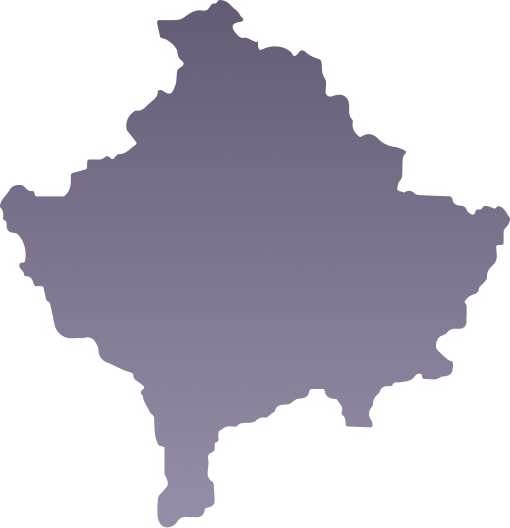
For Kosovo, illicit financial flows (IFFs) — valued at around 7% of GDP — are a serious concern. The country has a number of high-scoring criminal markets, including financial crime, trade in counterfeit goods, drugs, human trafficking and smuggling, cyber-dependent crimes and arms trafficking.
Civil society organizations in Kosovo play an important role in the response to IFFs. They are included in the process of policy development either directly as members of the working groups or indirectly through the process of public consultation.
IFFs are not defined in Kosovo's legislative and policy documents, contributing to a lack of broad understanding of the concept among various stakeholders, including the public sector. However, Kosovo's National Risk Assessment (NRA) of 2020 (see the table) produced by Kosovo’s financial intelligence unit (FIU) has red-flagged significant threats posed by tax evasion, corruption and bribery, and several illicit markets. (For more on the FIU, see the section on financial intelligence below).
The NRA has identified that fiscal evasion in Kosovo is tied to widespread informality, allowing profits to go unreported, and that illicit proceeds typically mirror the routes of legal remittances and trade, primarily flowing through the banking sector: money transfer agents and simple cash smuggling are the primary methods used to handle most illicit funds entering Kosovo. A new NRA is currently being drafted and is expected to be completed in 2025.
Organized crime, money laundering and terrorist financing are increasingly becoming transnational in nature, and cooperation and exchange of information with other countries and organizations is crucial in combating such flows. Kosovo’s framework for mutual legal assistance in criminal matters is overseen by the Ministry of Justice.
The FIU has actively engaged in international cooperation, being a member of the Egmont Group of Financial Intelligence Units since 2017, signing several memoranda of understanding (MoUs) with other FIUs globally, which have enhanced bilateral cooperation (see the table below for a summary). However, mutual legal assistance for money laundering investigations and prosecutions requires greater prioritization.
The International Law Enforcement Coordination Unit (ILECU) is the contact point for international police cooperation and information exchange. Kosovo’s police service is not a member of INTERPOL or the Southeast European Law Enforcement Center, but signed a cooperation agreement with Europol in 2020 and has exchanged information — including financial information — since 2022. Cooperation with the European Union Agency for Criminal Justice Cooperation is limited owing to Kosovo's political status. Kosovo’s customs authority joined the World Customs Organization in 2017, which in 2018 published a report on IFFs via trade mis-invoicing and proposed measures to increase the mandate of customs, strengthen capacities and collaboration, and make better use of techonology in tackling this issue. Its lack of membership to international organizations such as INTERPOL and Kosovo’s political status continue to pose obstacles to international cooperation.
Kosovo's supervisory framework involves various entities overseeing compliance and prudential aspects of financial and non-financial sectors, with certain gaps and regulatory efforts yet to be finalized.
The private sector and civil society are integral to the measures aimed at preventing IFFs in Kosovo.
The reporting entities in Kosovo are:
The Business Registration Agency makes available publicly accessible information about legally registered entities, including their unique identification numbers, employee counts, addresses, business types, authorized personnel and owners. The 2020 National Risk Assessment examined legal persons to evaluate their susceptibility to misuse for money laundering (including a reference to trade-based money laundering) and terrorist financing. This concern is reiterated in the Serious and Organized Crime Threat Assessment, recognizing the use of shell and offshore companies for money laundering in Kosovo.
A range of financial intelligence and other relevant information is collected and used by the following competent authorities to prevent and combat IFFs in Kosovo:
Most data on IFFs is gathered by the FIU, the tax administration and the Kosovo Police. The FIU is an independent central national institution responsible for receiving, analyzing and sharing information related to potential money laundering and terrorist financing. Currently understaffed, the FIU collaborates with five liaison officers from various agencies, each undergoing security clearance by the intelligence agency.
Secure systems like ‘goAML’ and a case management database support the FIU’s operations. However, there is a need for improved access to systems like the tax administration, the Central Bank’s national bank account register and the border management system, not to mention database interoperability.
Although cooperation between these authorities is generally positive, it is critical to improve coordination and receive feedback from law enforcement agencies. It has been noted that very few reports are provided by customs and most relate to undeclared monetary instruments at the border; meanwhile no suspicion seems to have been reported by customs with regard to trade-based money laundering.
Kosovo's institutional framework and legislative structure are established to investigate IFFs in the formal financial system, particularly money laundering connected to predicate offences and standalone cases. The law on extended powers of confiscation allows asset confiscation unrelated to the original criminal offence, supplementing the Criminal Procedure Code’s limitations.
The Special Prosecution service has exclusive jurisdiction over money laundering and terrorist financing investigations, with special departments dedicated to prosecuting corruption, financial crime, terrorism, organized crime and war crimes. The authorities have limited understanding and capacities in investigating standalone money laundering cases.
The legislative framework for asset confiscation in Kosovo is regulated by the Criminal Code (in the case of standard confiscation) and the Law on Extended Powers of Confiscation (extended confiscation).
Standard confiscation involves seizing assets connected to the criminal offence; extended confiscation allows the seizure of assets unrelated to the offence. Although the legal framework is in place, limited progress has been made in confiscation of assets, particularly extended confiscation. In addition, Kosovo’s legal framework lacks provisions for the social reuse of confiscated assets and confiscation of virtual assets.
From 2014 to 2021, there was a significant disparity (€185.98 million) between the value of seized assets and those ultimately confiscated, with only 3.3% of seized assets being confiscated. In contrast, the EU average is around 50%. Additionally, only 28 confiscations were enforced out of 1 695 cases between 2017 and 2021. The management of seized and confiscated assets falls under the Agency for the Management of Seized and Confiscation Assets (part of the Ministry of Justice).
There was a significant legislative initiative in 2021 to establish the State Bureau for Verification and Confiscation of Unjustified Wealth, enabling non-conviction-based confiscation. The revised draft law is currently under review by the Constitutional Court for the second time. In May 2024, the Asset Recovery Office became fully operational within the State Prosecutor's Office. This office brings together key institutions, including the police, the FIU, the Agency for the Management of Confiscated and Sequestered Assets, tax admistration and customs.
Non-profit organizations (NPOs) in Kosovo are defined by Law no.06/L-043 (freedom of association in non-governmental organizations), according to which there are three forms of organization: association, foundation and institute.


